
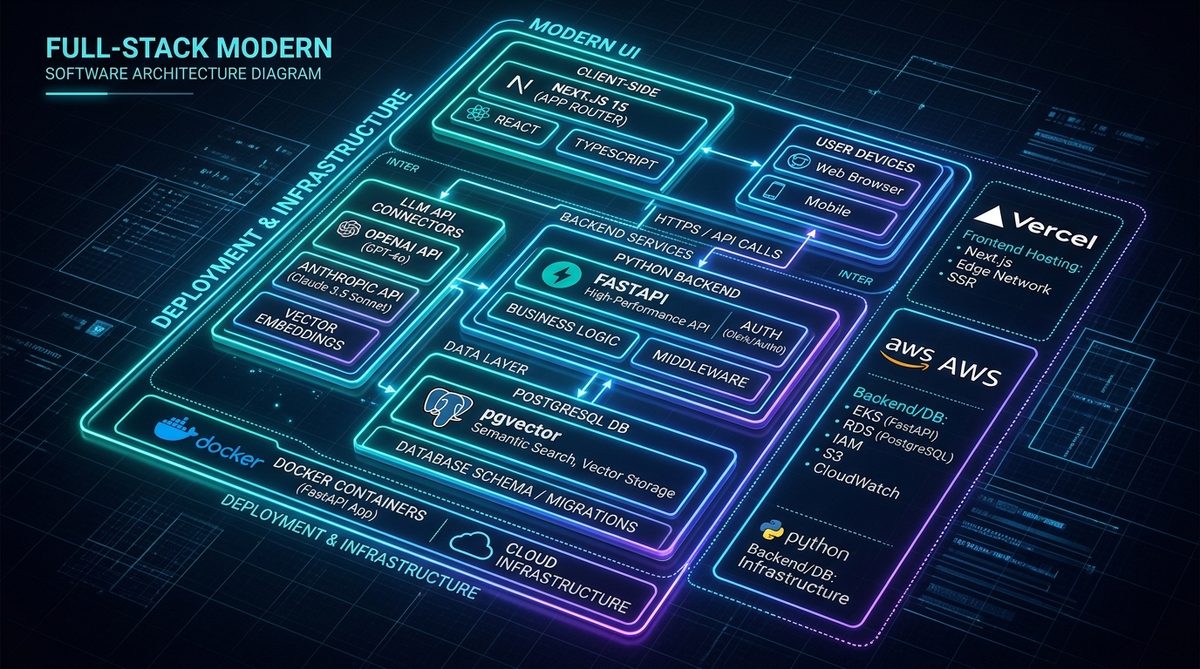
Building a commercial SaaS application in 2026 requires an architecture that is fast for users, maintainable for developers, and cheap to operate.
With Next.js 15, the framework has reached peak maturity: React Server Components (RSC), asynchronous request handling, Turbopack bundling, and native Server Actions allow a solo engineer or a small team to build products that previously required a 10-person engineering department.
As a Full-Stack Developer & AI Engineer, here is the exact production blueprint I use to architect, develop, and deploy scalable SaaS platforms for startups and commercial clients.
1. The 2026 Production SaaS Architecture
┌────────────────────────────────────────────────────────────────────────┐
│                        NEXT.JS 15 SAAS ARCHITECTURE                    │
├────────────────────────────────────────────────────────────────────────┤
│ Frontend: Next.js 15 (App Router) • React 19 • Tailwind CSS v4 • Shadcn│
│                                   │                                    │
│ Auth & Multi-Tenancy: Clerk / Supabase Auth (Organization RLS)         │
│                                   │                                    │
│ Data Layer: PostgreSQL (Supabase/Neon) • Drizzle ORM • pgvector        │
│                                   │                                    │
│ Payments: Stripe Checkout & Webhooks (Usage-Based + Subscriptions)    │
│                                   │                                    │
│ Deployment: Vercel Edge Network + AWS Container Microservices          │
└────────────────────────────────────────────────────────────────────────┘
2. Core Architectural Decisions & Why They Matter
A. React Server Components (RSC) by Default
In Next.js 15, components render on the server by default unless marked with 'use client'.
- Security: Database secrets, API keys, and internal logic remain strictly on the server.
- Performance: Zero JavaScript sent to the client for static views, cutting bundle sizes by 40–70% and achieving 100/100 Lighthouse performance scores.
- Data Fetching: Fetch data directly inside components using async/await without
useEffector client-side spinners:
// app/dashboard/page.tsx - Server Component with direct DB query
import { auth } from '@clerk/nextjs/server';
import { db } from '@/lib/db';
import { projects } from '@/lib/schema';
import { eq } from 'drizzle-orm';

export default async function DashboardPage() {
  const { userId, orgId } = await auth();

  const userProjects = await db
    .select()
    .from(projects)
    .where(eq(projects.tenantId, orgId || userId));

  return (
    <main className="p-8">
      <h1 className="text-2xl font-bold font-display">Your Projects</h1>
      <div className="grid grid-cols-1 md:grid-cols-3 gap-6 mt-6">
        {userProjects.map((project) => (
          <div key={project.id} className="glass-card p-6 rounded-xl">
            <h3 className="font-semibold text-white">{project.name}</h3>
            <p className="text-xs text-muted-foreground mt-2">{project.description}</p>
          </div>
        ))}
      </div>
    </main>
  );
}
B. Type-Safe Mutations with Server Actions & Zod
Server Actions replace traditional REST boilerplate controllers:
// app/actions/create-project.ts - Type-Safe Server Action
'use server';

import { z } from 'zod';
import { auth } from '@clerk/nextjs/server';
import { db } from '@/lib/db';
import { projects } from '@/lib/schema';
import { revalidatePath } from 'next/cache';

const CreateProjectSchema = z.object({
  name: z.string().min(3).max(50),
  description: z.string().optional(),
});

export async function createProject(formData: FormData) {
  const { userId, orgId } = await auth();
  if (!userId) throw new Error('Unauthorized');

  const validated = CreateProjectSchema.parse({
    name: formData.get('name'),
    description: formData.get('description'),
  });

  await db.insert(projects).values({
    name: validated.name,
    description: validated.description || '',
    tenantId: orgId || userId,
  });

  revalidatePath('/dashboard');
}
3. Production Hardening Checklist for SaaS
When shipping a commercial SaaS product, I enforce these critical standards:
- Multi-Tenant Data Isolation: Database tables use Row-Level Security (RLS) or strict
tenantIdqueries so no tenant can ever see another customer's data. - Stripe Webhook Idempotency: Webhooks check whether a transaction event has already been recorded in a
processed_eventstable before executing credits. - Observability & Error Tracking: Integrated with Sentry and PostHog for real-time error alerts and user behavior analytics.
- Optimistic UI Updates: Instant UI feedback on clicks using React 19's
useOptimistichook.
4. Typical Development Timeline & Deliverables
┌────────────────────────────────────────────────────────────────────────┐
│                   3-WEEK SAAS MVP ROADMAP (TYPICAL)                    │
├────────────────────────┬───────────────────────────────────────────────┤
│ Week 1: Foundation     │ Auth, Database Schema, Multi-Tenant Setup,    │
│                        │ Design System & Component Library.            │
├────────────────────────┼───────────────────────────────────────────────┤
│ Week 2: Core Features  │ Main User Workflow, AI Integration, Dashboard,│
│                        │ Real-Time Streaming UI.                       │
├────────────────────────┼───────────────────────────────────────────────┤
│ Week 3: Billing & QA   │ Stripe Subscriptions, End-to-End Testing,     │
│                        │ SEO Optimization, Vercel Production Launch.   │
└────────────────────────┴───────────────────────────────────────────────┘
Build Your Next SaaS Application With Next.js 15
Launching a scalable SaaS product requires clean architecture, strict typing, and high development velocity from day one.
Planning to launch an AI SaaS, custom web application, or client portal?
Explore my web development services, inspect my portfolio projects, or send me a message on WhatsApp to discuss your application roadmap.