
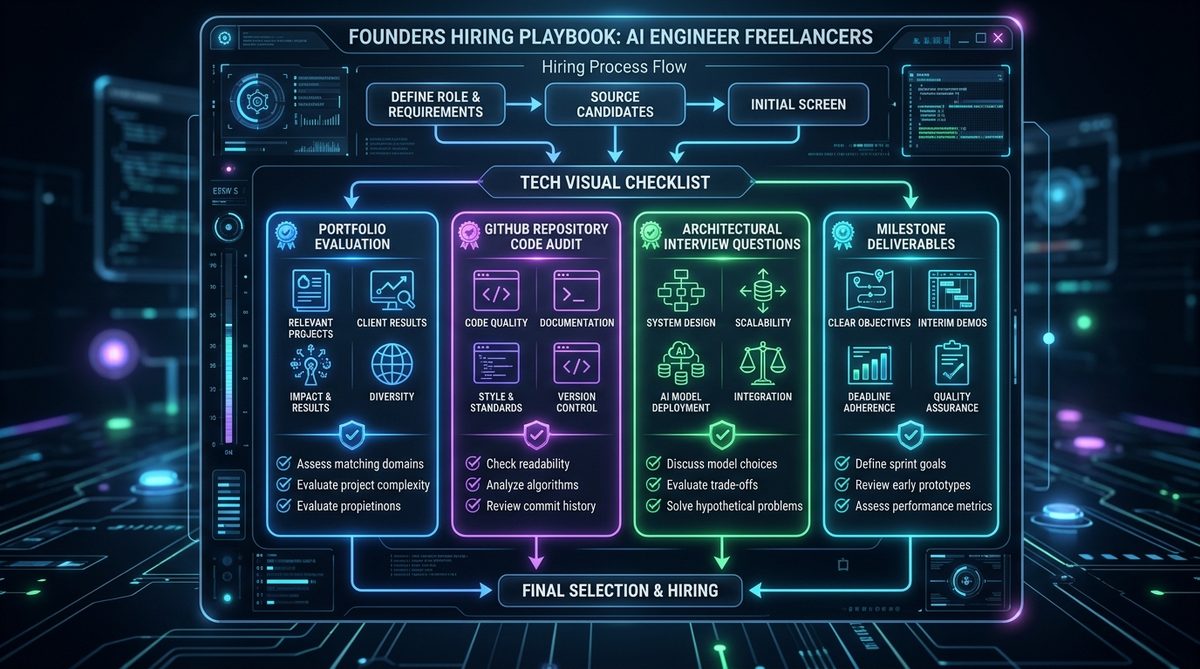
Hiring a freelance AI developer can either be the smartest strategic decision your business makes this quarter—or a frustrating cycle of missed deadlines, broken code, and wasted capital.
The difference almost always comes down to how you prepare your project scope, how you evaluate candidates' technical proof, and how you structure the contract.
If you are a founder or product leader looking to hire a freelance AI engineer, this playbook provides the exact step-by-step process to source, vet, and manage an exceptional engineer from kickoff to production delivery.
1. What to Prepare Before Reaching Out to Developers
The most common reason freelance projects derail is ambiguous scoping. If your initial outreach is "I want to build an AI app like ChatGPT for real estate," you will attract low-quality bidding bots on freelancer marketplaces.
Instead, prepare a concise 1-page Project Brief answering these five questions:
┌────────────────────────────────────────────────────────────────────────┐
│                   THE 5-POINT PROJECT BRIEF TEMPLATE                   │
├────────────────────────────────────────────────────────────────────────┤
│ 1. Core Problem: What specific manual process or customer friction     │
│    are we solving?                                                     │
│ 2. Inputs & Data: What files, text, images, or APIs will the system    │
│    ingest? (e.g. 5,000 vendor PDFs per month).                         │
│ 3. Target Output: What must the AI produce? (e.g. Verified JSON        │
│    inserted into Postgres, streamed text response in web UI).          │
│ 4. Tech Stack Preferences: Existing databases or preferred frameworks │
│    (e.g. Next.js 15, Supabase, Python, n8n).                          │
│ 5. Timeline & Budget Range: Target launch deadline and approved budget │
│    allocation.                                                         │
└────────────────────────────────────────────────────────────────────────┘
When you provide a clear brief, top-tier engineers will reply with a detailed technical architectural proposal within 24 hours.
2. The 4-Step Candidate Vetting Framework
┌────────────────────────────────────────────────────────────────────────┐
│                         CANDIDATE VETTING PIPELINE                     │
│  Step 1: Code & GitHub Audit ──► Step 2: Architecture Interview        │
│                                           │                            │
│  Step 4: Milestone Kickoff   ◄── Step 3: Paid Trial Sprint             │
└────────────────────────────────────────────────────────────────────────┘
Step 1: Code Quality & GitHub Repository Audit
Do not rely on claims on a resume. Look for proof of working code:
- Active GitHub commits: Look for clean commit messages, modular file structures, and typed code (TypeScript, Python).
- Open Source or Live Demos: Ask for live URLs of deployed web apps, interactive chatbots, or SaaS platforms they have personally built.
Step 2: The Architectural Vetting Interview (30 Minutes)
During your discovery call, ask high-signal questions:
- "Can you walk me through the architecture of your most recent AI project?"
- "How did you handle hallucinations, rate limits, and latency?"
- "What database and vector search setup do you recommend for our use case and why?"
A great engineer explains complex technical decisions in clear business language. If they hide behind dense jargon without explaining business tradeoffs, beware.
Step 3: The Paid Micro-Trial (Optional but Recommended)
For large, multi-month contracts, start with a small, paid 2–3 day milestone:
- Example: Build the core data extraction prompt with validation tests, or design the interactive frontend wireframe in Next.js.
- This proves communication velocity, code quality, and adherence to deadlines with zero financial risk.
3. Fixed-Price Milestones vs. Hourly Rates: What to Choose?
┌────────────────────────────────────────┬────────────────────────────────────────┐
│         FIXED-PRICE MILESTONES         │              HOURLY BILLING            │
├────────────────────────────────────────┼────────────────────────────────────────┤
│ Best for: Clearly scoped MVPs,         │ Best for: Ongoing maintenance, code    │
│ RAG chatbots, IDP pipelines, features. │ reviews, exploratory R&D, advisory.    │
│                                        │                                        │
│ Pros: Predictable budget, clear        │ Pros: Maximum flexibility to change    │
│ deliverables, alignment on outcomes.   │ requirements sprint-by-sprint.         │
└────────────────────────────────────────┴────────────────────────────────────────┘
For 90% of new projects, milestone-based fixed pricing is superior because it aligns incentives: the developer is rewarded for shipping fast and delivering a working outcome, rather than clocking billable hours.
4. Non-Negotiable Contract & IP Clauses
When drafting your freelance agreement, ensure these three clauses are included:
- 100% Intellectual Property (IP) Transfer: All custom source code, documentation, prompts, and database schemas belong entirely to your company upon milestone payment.
- Confidentiality & NDA: Strict non-disclosure protecting your business data, API keys, and proprietary company documents.
- Warranty & Bug-Fix Period: A standard 14 to 30-day post-launch support window where any bugs related to the agreed scope are resolved at no extra charge.
5. Working With a Global Freelance AI Engineer
Working with a skilled remote developer from India provides significant advantages:
- Cost Efficiency: Top-tier engineering expertise at 40–60% of US/UK agency rates.
- Direct Communication: No middle managers, account executives, or communication bottlenecks.
- Time Zone Overlap: Flexible working hours covering US (morning overlap), UK/Europe (full afternoon overlap), and UAE/Australia (same day delivery).
Ready to Hire for Your AI Project?
If you are looking for an experienced freelance AI and Full-Stack Developer who understands both software architecture and business outcomes, let's connect.
I specialize in:
- Production RAG & AI Chatbots trained on custom company knowledge.
- Intelligent Document Processing (IDP) for invoices, POs, and statements (80K+ docs/month experience).
- Full-Stack AI SaaS MVPs with Next.js 15, FastAPI, TypeScript, and Supabase.
- Autonomous Business Automations with n8n and Python.
Explore my services directory, review my interactive case studies, or send me a message on WhatsApp to discuss your project requirements today.